Salvia
Salvia divinorum is a plant species in the sage genus native to the cloud forests of Oaxaca, Mexico, containing the potent compound salvinorin A.citation needed Used traditionally by Mazatec shamans for spiritual healing and divination, it produces short but intense dissociative and hallucinogenic effects when smoked or chewed. Salvinorin A is the most potent naturally occurring hallucinogen and is structurally unique among psychoactive compounds, being a diterpenoid rather than an alkaloid. High doses can produce bizarre, potentially terrifying experiences.
Dosage & Duration
Dosage
Doses are population estimates that vary widely between individuals.
Releasing salvinorin A from plant material requires temperatures near 240 °C, so an intense flame such as a torch lighter is often used. Concentrated extracts are labelled with multiplicative factors (e.g. 5x, 10x), but no accepted standard exists for these claims and potency varies with the starting leaf and extraction efficiency, making dose per inhalation unpredictable. Salvinorin A is present in dried Salvia divinorum plant material at approximately 0.18% concentration.1 Effects are short but very intense, and higher doses frequently produce disorienting or frightening scenarios; a sober sitter and a safe, quiet setting are advised.
Duration
Subjective Effects
Legacy content. A statistically backed ontology from Mindstate Design Labs is coming soon.
Effects vary widely by individual, dose, and context.
Physical
Cognitive
The general head space of salvia is described by many as one of extreme cognitive suppression and strong feelings of confusion. This substance is best described as a drug that does not create profound personal insights, just profound and interesting experiences.
Visual
Geometry
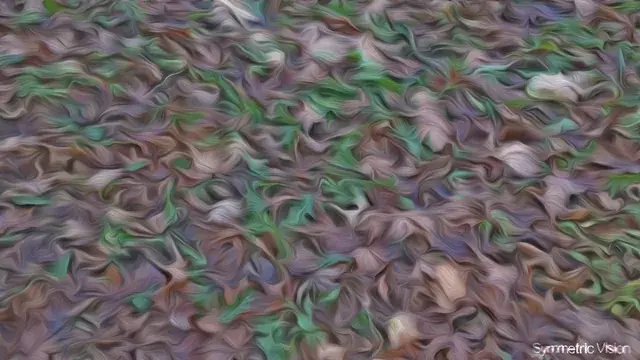
At moderate to high dosages with darkness or closed eyes, once the user has become disconnected from their body, a full array of level 1-4 hallucinatory structures becomes present. This is distinctively different in style to other dissociatives and significantly more likely to be based on mathematical constructs such as vast and elaborate fractals.
Distortions
When a user keeps their eyes open throughout the duration of a moderate to strong trip, a number of open eye distortions are usually present. These are significantly more simplistic than distortions found with other classes of hallucinogens.
Hallucinatory States
Salvia produces a full range of high level hallucinatory states in a fashion that is just as consistent as that of classical psychedelics.
Auditory
The auditory effects of salvinorin A are common in their occurrence.

Pharmacology
Pharmacodynamics
Salvinorin A, the principal psychoactive constituent of Salvia divinorum, is a structurally unique trans-neoclerodane diterpenoid that acts as a potent and selective κ-opioid receptor agonist.citation needed Unlike classical hallucinogens such as LSD, psilocybin, and mescaline, salvinorin A has no action at the 5-HT2A serotonin receptor.2 Research indicates it is also a potent D2 receptor partial agonist, which may contribute significantly to its effects.citation needed The compound additionally shows activity at CB1 cannabinoid receptors, particularly in inflamed gut tissue where it exhibits antispasmodic properties through a prejunctional mechanism. Salvinorin A is notable for being the most potent naturally occurring hallucinogen by mass, with activity at doses as low as 200 μg, and is the first documented diterpene hallucinogen. It contains no nitrogen atoms, distinguishing it structurally from alkaloid-based opioid receptor ligands and other naturally occurring hallucinogens.2
Pharmacokinetics
Salvinorin A is inactivated by the gastrointestinal system, meaning that alternative routes of administration are necessary to improve its absorption. It can be absorbed through the oral mucosa.3 It is metabolised through deacetylaction, delactonation and glucuronidation.4
Interactions
An unlisted combination is an unknown one, not a safe one. Check a dedicated combination chart before mixing.

Tolerance
Tolerance timelines are rules of thumb, not exact schedules, and vary widely between individuals and use patterns.
Harm Potential
Addiction & Dependence
Psychological
Extremely LowSalvia divinorum does not appear to produce psychological dependence or compulsive redosing patterns.citation needed The often challenging and dysphoric nature of the experience may actually discourage repeated use.
Physical
Extremely LowNo evidence of physical dependence or withdrawal symptoms has been documented with salvia use.citation needed
Toxicity
Inhaling hot vapor produced by heat guns or other high-temperature methods can irritate and potentially damage lung tissue;5 this risk is specific to certain administration methods rather than the substance itself.
Psychosis Risk
Salvia can produce intense, bizarre, and otherworldly experiences that may be extremely confusing or terrifying, particularly at higher doses. Users commonly report panic, fear, paranoia, and a sense of encountering hostile or sinister presences.citation needed These acute psychological effects typically resolve as the short-acting substance wears off.6 One controversial case has been cited linking salvia use to depression and subsequent suicide, though no other cases have been reported alleging salvia as a serious factor in suicide or death.citation needed
History & Culture
Indigenous Use and Traditional Context
Salvia divinorum is native to the Sierra Mazateca in Oaxaca, Mexico, where it has been used by the Mazatec people primarily to facilitate shamanic visions in the context of curing and divination.citation needed The Mazatec see the plant as an incarnation of the Virgin Mary and begin their rituals…
Legality
International
Salvia divinorum and salvinorin A are not listed in the schedules of the 1961 Single Convention on Narcotic Drugs, the 1971 Convention on Psychotropic Substances, or the tables of the 1988 Convention against Illicit Traffic in Narcotic Drugs and Psychotropic Substances. The conventions therefore do not internationally schedule the plant or its active constituent.
By Country

 BelgiumIllegal
 CanadaIllegal
 DenmarkIllegal
 EstoniaIllegal
 FranceIllegal
 New ZealandIllegal
 RussiaIllegal
 South KoreaIllegal
 SwedenIllegal
 SwitzerlandIllegal
 ColombiaRestricted
 FinlandRestricted
 JapanRestricted
 United StatesNot scheduled
 IowaIllegal
 TexasIllegal
 KansasIllegal
 AlabamaIllegal
 FloridaIllegal
 IndianaIllegal
 DelawareIllegal
 IllinoisIllegal
 NebraskaIllegal
 OklahomaIllegal
 MinnesotaRestricted
 Rhode IslandRestricted
 North CarolinaIllegal
 NetherlandsNot scheduled
 PortugalNot scheduled
References
Citations
Article Status
 Step 1 · Automated synthesis
An autonomous workflow built by Josie Kins compiled this article's foundation from information published across the web.
- LStep 2 · First-pass review
A first pass manual review and edit of article prose and copy has been performed by subject-matter expert Lyrea. This does not guarantee factual accuracy. An additional human review for each of this article's citations is yet to be performed.
- Step 3 · Citation reviewPending
No one has reviewed this article's citations yet. That second pass checks each claim against the source it cites.
Suggest an edit
Spotted a mistake, an outdated claim, or something missing from the Salvia article? Send the editors a private note. Feedback lands in a moderation queue and is never shown on the site.
Wish to give generalised feedback? You can do so here.